What Are the 37 Miracles Performed by Jesus? A Comprehensive Guide
What Are the 37 Miracles Performed by Jesus? A Comprehensive Guide
What Are the 37 Miracles Performed by Jesus? A Comprehensive Guide
The question what are the 37 miracles performed by Jesus has long fascinated students of the Bible, scholars, and readers who want to understand the breadth and depth of Jesus’ ministry. This article provides a structured overview of the miracles attributed to Jesus in the canonical Gospels, explains why lists vary, and presents a widely cited compilation that highlights the major categories of Jesus’ works—nature miracles, healings, exorcisms, and resurrection appearances. While different traditions may enumerate the miracles slightly differently, the core idea remains: Jesus demonstrated divine authority, compassion, and power through acts that touched individuals, communities, and creation itself.
Understanding the concept of miracles in the Gospels
Miracles in the Christian scriptures are events that surpass ordinary human capacity and reveal God’s presence and sovereignty. In the Gospels, these acts are not random curiosities; they are signs that point to who Jesus is and what his mission entails. The miracles reveal several enduring themes, including compassion for the afflicted, authority over nature, and the breaking-in of the Kingdom of God. Readers often approach these stories in stages: noticing the need or problem, witnessing Jesus’ response, and reflecting on the implications for faith, discipleship, and ethical living.
The scope of the idea: why lists vary
Scholars across traditions agree that Jesus performed a wide range of miracles, but there is no single, universally accepted catalog of exactly 37 miracles. The count depends on which events are included (for example, some miracles are recounted in several Gospel accounts, while others appear predominantly in one). Some lists emphasize healings and exorcisms; others highlight nature miracles or resurrection appearances. Because of this variation, many readers encounter a commonly cited compilation that groups miracles into familiar categories and presents them as a coherent set of 37 items. The present guide follows one widely cited enumeration that aims to cover the most consistently recognized accounts from the four Gospels, while clearly noting the biblical references for each item.
The categories of Jesus’ miracles
To organize the material in an accessible way, the miracles are grouped into four broad categories. Each category reflects a facet of Jesus’ ministry and helps readers see how the acts interrelate with the Gospel narratives.
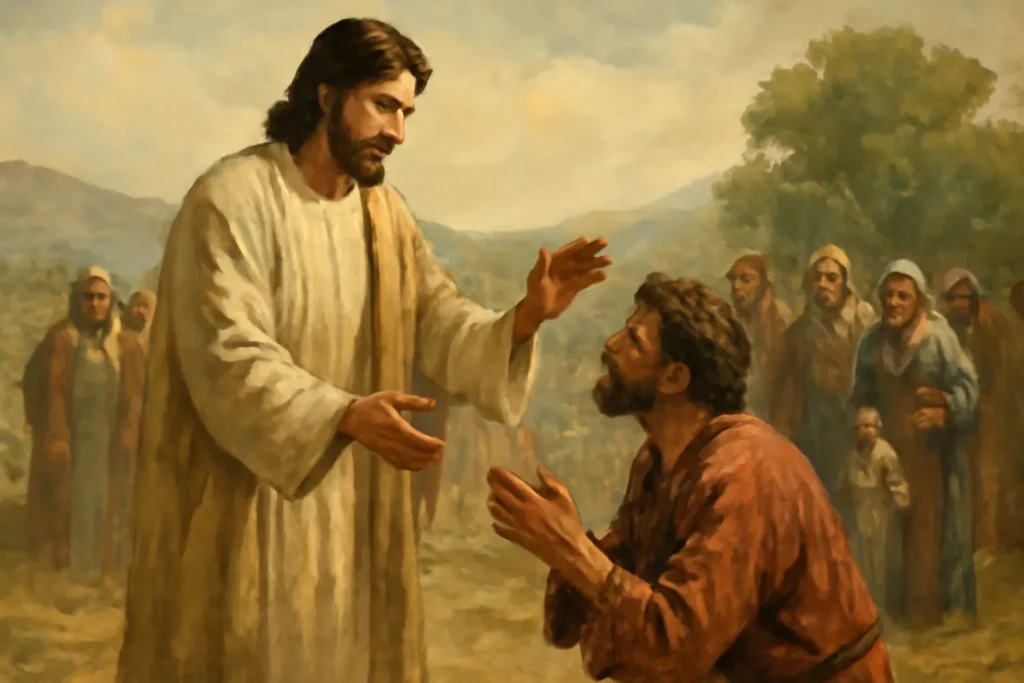
Many miracles focus on physical healing, restoration of health, and restoration of social dignity. They demonstrate Jesus’ compassion for suffering and his authority to restore wholeness in body and life. Examples range from curing illness and disability to restoring dignity and social standing by addressing long-standing afflictions.
Nature and creation
Several miracles reveal Jesus’ authority over the created order—water, weather, and physical resources respond to his word. These signs point beyond the immediate needs of individuals to the cosmic scope of God’s rule.
Exorcisms and liberation
Delivering people from demonic oppression is a prominent aspect of Jesus’ ministry in the Gospels. These events highlight the spiritual dimension of Jesus’ authority and his mission to bring freedom from captivity to sin and evil.
Raising the dead and posthumous signs
A smaller but significant subset of miracles involves restoring life to the dead or revealing the power of life beyond death. These acts foreshadow the central Christian conviction of resurrection and eternal life.
A canonical enumeration: what are the 37 miracles (one widely cited list)
Below is a representative, widely circulated list of 37 miracles attributed to Jesus in the Gospels. The phrasing emphasizes the essence of each event, with biblical references in parentheses. Note that some events appear in multiple Gospel accounts, and the order here is designed for thematic flow rather than a strict chronological ledger.
Water into wine at Cana (John 2:1-11) — a nature sign that reveals Jesus’ transformative power and his glory.
Healing the official’s son (John 4:46-54) — a powerful display of faith and Christ’s life-giving word reaching distance.
Healing Peter’s mother-in-law of fever (Matthew 8:14-15; Mark 1:29-31; Luke 4:38-39) — immediate relief that enables service and community life.
Healing many at Capernaum (Matthew 8:16-17; Mark 1:32-34; Luke 4:40-41) — a broad demonstration of compassion and authority.
Healing a man with leprosy (Matthew 8:2-4; Mark 1:40-45; Luke 5:12-14) — restoration of health and social inclusion.
Healing the centurion’s servant (Matthew 8:5-13; Luke 7:1-10) — faith and authority acknowledged even at a distance.
Healing a paralyzed man lowered through the roof (Matthew 9:1-8; Mark 2:1-12; Luke 5:17-26) — forgiveness and restoration demonstrated together.
Healing a man with a withered hand (Matthew 12:9-14; Mark 3:1-6; Luke 6:6-11) — confrontation with legalism and mercy extended.
Calming the storm (Matthew 8:23-27; Mark 4:35-41; Luke 8:22-25) — creation obeys the voice of the Messiah, yielding peace.
Casting out a demon from a man in Capernaum (Mark 1:21-28; Luke 4:31-37) — spiritual liberation and authority over evil.
Healing the Gerasene demoniac (Matthew 8:28-34; Mark 5:1-20; Luke 8:26-39) — a dramatic exorcism and social reintegration.
Healing a woman with a hemorrhage (Matthew 9:20-22; Mark 5:25-34; Luke 8:43-48) — faith touching the fringe of the hem of his garment.
Raising Jairus’ daughter (Matthew 9:18-26; Mark 5:21-43; Luke 8:40-56) — life restored with tenderness and authority.
Healing two blind men (Matthew 9:27-31) — sight restored, a visible sign of spiritual illumination.
Healing a mute demoniac (Matthew 9:32-34) — restoration of voice and wholeness.
Feeding the 5,000 (Matthew 14:13-21; Mark 6:30-44; Luke 9:10-17; John 6:1-14) — abundance in the wilderness, signaling God’s provision.
Walking on the sea (Matthew 14:22-33; Mark 6:45-52; John 6:16-21) — mastery over nature, inviting trust.
Healing the sick in Gennesaret (Matthew 14:34-36; Mark 6:53-56) — healing touch in a borderland region.
Healing a blind man at Bethsaida (Mark 8:22-26) — progressive unveiling of truth and perception.
Healing a deaf and mute man (Mark 7:31-37) — restoration of hearing, speech, and community integration.
Feeding the 4,000 (Matthew 15:32-39; Mark 8:1-10) — another instance of provision for a large crowd.
Healing a blind Bartimaeus near Jericho (Mark 10:46-52) — persistent faith meets mercy and sight restored.
Cursing the fig tree and withering it (Mark 11:12-14, 20-21) — visible symbol of judgment and faith’s power.
Healing a woman bent over for 18 years (Luke 13:11-13) — liberation from a long-standing burden.
Healing a man with dropsy (Luke 14:2-4) — compassion that meets legalistic concerns with mercy.
Healing ten lepers (Luke 17:11-19) — gratitude and faith highlighted in the healed crowd.
Raising the widow’s son at Nain (Luke 7:11-17) — life restored amid public sorrow and divine compassion.
Jesus’ miracles of resurrection appearances after his death and burial (e.g., appearances to Mary Magdalene and the disciples) (John 20:11-29; Luke 24:13-53) — definitive signs of victory over death.
The miraculous catch of fish after the Resurrection appearances (Luke 5:1-11; John 21:1-14) — vocation renewed and community formed.
The miracle of healing the servant’s ear (Luke 22:50-51) — mercy in the heat of conflict, restoring figuratively and literally.
Forgiveness alongside healing (Mark 2:5-12) — Jesus heals and proclaims forgiveness as part of wholeness.
Blessings and appearances that confirm faith in the risen Christ (John 20:19-23; Luke 24:36-49) — commissioning and peace for fearful followers.
Additional post-resurrection signs and teachings that verify authority (John 21:1-23) — restoration of mission and assurance of promise.
The wild yet meaningful post-resurrection conversation that confirms identity and mission (Luke 24:13-35) — from disbelief to recognition on the road to Emmaus.
The revelation of Jesus in the breaking of bread (Luke 24:30-31) — spiritual sight and intimate fellowship opened by presence.
The commission to the disciples to continue healing and teaching (Matthew 28:16-20; Mark 16:15-18) — empowerment for mission beyond the Gospel accounts themselves.
The miraculous provision in times of need (various Gospel episodes) — a pattern of care that undergirds the early Christian community.
The overall synthesis: Jesus’ acts as signs pointing toward the Kingdom (general summary) — these miracles reveal Jesus’ identity, authority, and compassionate intent.
In-depth look at the miracles by category
To provide a deeper understanding, here are more detailed notes on how these miracles function within the narrative and what scholars often emphasize about each category.
Healing and restoration in the Gospels
Healing miracles demonstrate compassion in action, showing that Jesus cares for physical pain, social stigma, and personal suffering.
They often contain an element of faith and response, highlighting the role of trust in Jesus’ power.
Many healings are accompanied by a moral or spiritual lesson—for example, forgiveness or reconciliation with community.
Nature miracles as signs of authority
Calming storms and walking on water illustrate control over natural laws and point to Jesus’ divine authority.
These signs invite readers to respond with trust, not merely awe, and to interpret the events in light of the Kingdom of God.
Exorcisms and liberation
Exorcisms reveal Jesus’ power over spiritual forces and emphasize liberation from bondage—physically, mentally, and socially.
The venues range from synagogues to quiet countryside, showing that freedom from oppression is central to Jesus’ ministry.
Resurrection and life beyond death
Raising the dead and post-resurrection appearances underscore the Christian belief in eternal life and the ultimate victory over death.
These events provide foundational belief for early Christians about who Jesus is and what his resurrection means for humanity.
Contemporary reflections: why these miracles matter today
For modern readers, these stories carry practical and spiritual significance beyond their ancient settings. They offer models of compassionate action, demonstrate the possibility of transformation in the face of long-standing illness or despair, and invite communities to envision a more just and peaceful world. Reading these miracles today can encourage people to consider how faith, hope, and charity intersect with daily life and moral decision-making.
Do all four Gospels record all of the miracles? No; each Gospel emphasizes different events based on its themes, audience, and theological goals. Some miracles are found in multiple Gospels, while others appear in only one.
Are there modern equivalents to these miracles? Christians often interpret the miracles as signs of God’s continuing care and as reminders of divine presence, even when literal miracles are not (or cannot be) observed in the same way today.
What is the purpose of listing miracles? Lists help readers study and compare Gospel accounts, understand categories, and reflect on the implications for faith, worship, and ethics.
How to study the miracles responsibly
If you want to engage with the miracles in a thoughtful, scholarly way, consider these practical steps:
Read the corresponding passages in parallel Bibles to observe variations in wording and emphasis.
Note the audience and setting of each miracle to understand its immediate purpose and message.
Explore theological commentaries that discuss historical context, literary structure, and Christology.
Reflect on how each miracle relates to themes of faith, mercy, and the coming of God’s Kingdom.
The collection of 37 miracles attributed to Jesus in the Gospel accounts reflects a multifaceted ministry that spans healing, liberation, provision, and life beyond death. While the exact enumeration can vary, the underlying message is consistent: Jesus acts as the one who reveals God’s presence among humanity, demonstrates compassionate power, and invites people into a transformative relationship with God. This comprehensive guide provides a framework for exploring the miracles not merely as curiosities, but as invitations to faith, ethical living, and hope grounded in the Christian story.
Para lectores que buscan una visión rápida
Si prefieres una síntesis rápida, aquí tienes una versión condensada en formato breve. Cada punto resume el tipo de milagro y su impacto, sin entrar en detalles de cada pasaje bíblico. Úsalo como punto de partida para un estudio más profundo:
Sanaciones y restauración — fortalecen el cuerpo y la vida social de la persona sanada.
Signos de la naturaleza — muestran soberanía sobre el entorno natural.
Exorcismos y liberación — liberan de la influencia de las fuerzas espirituales.
Resurrecciones y visiones del reino — apuntan a la esperanza de la vida eterna y a la autoridad final de Jesús.
En última instancia, la pregunta what are the 37 miracles performed by Jesus sirve como un marco para explorar la identidad de Jesús, su misión redentora y su mensaje de esperanza. A través de estas acciones, los evangelios buscan presentar una imagen cohesiva de Jesús como el Mesías, cuyo poder y amor transforman historias individuales y comunidades enteras. Al estudiar estas narrativas con atención, lectura crítica y reflexión espiritual, los lectores pueden acercarse a una comprensión más profunda de la fe cristiana y de su influencia en la moral y la vida cotidiana.






Deja una respuesta