What Was Lot's Wife Name? Guía completa sobre su identidad, historia y significado
What Was Lot's Wife Name? Guía completa sobre su identidad, historia y significado
What Was Lot's Wife Name? is a question that often appears in discussions about biblical narratives, art, and literary symbolism. This article explores the identity, history, and significance of Lot’s wife, focusing on what the canonical text says, what later traditions have claimed, and why the unnamed figure continues to capture the imagination of readers and scholars alike. What Was Lot's Wife Name? is not just about a missing name; it is about how a single moment—turning back to a life left behind—has become a powerful lens for exploring memory, obedience, and consequence in ancient storytelling. Below you will find a thorough guide organized to help you understand the issue from multiple angles, using clear sections, careful distinctions between canon and tradition, and thoughtful interpretation.
The canonical account: Lot, Sodom, and the unnamed wife
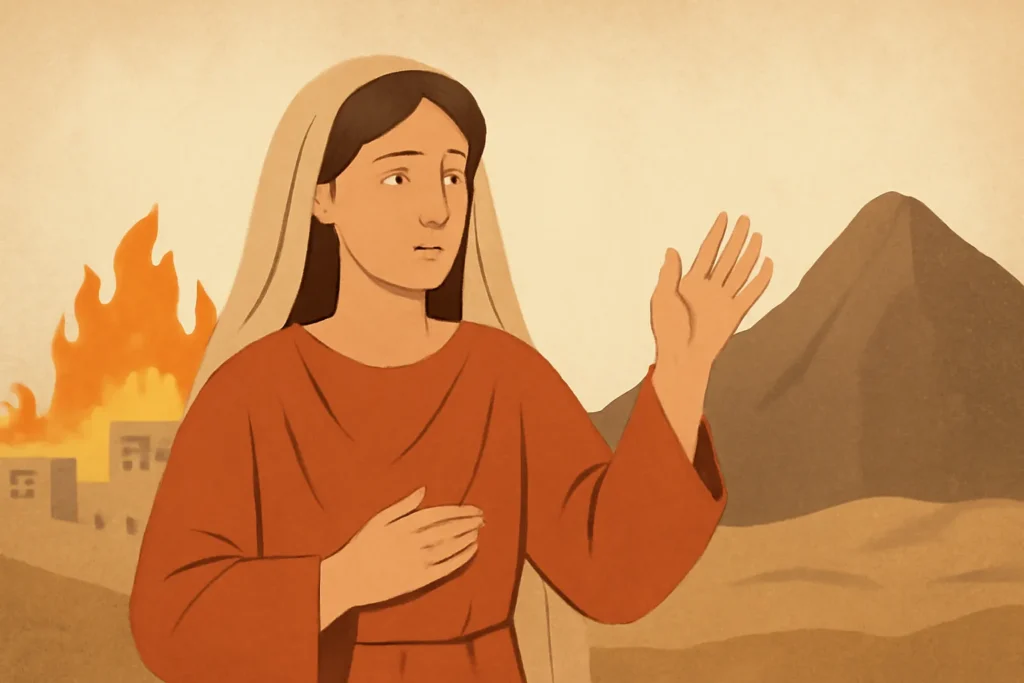
The story of Lot and his family is found in the book of Genesis, primarily in Genesis 19. In the biblical narrative, Lot hosts two angels who have come to assess the wickedness of the cities of Sodom and Gomorrah. As the angels warn Lot to flee with his family and not look back, his wife does indeed look back at the city as it is destroyed by divine judgment. In the Genesis account, the woman who becomes the pillar of salt is never named. The text refers to her simply as “Lot’s wife” or as “the wife of Lot,” and it does not supply a personal name or a lineage for her. This absence—an unnamed figure in a pivotal moment—has invited extensive interpretation over the generations.
The descriptor used in Genesis emphasizes her relation to Lot rather than her own individual identity: “the wife of Lot”.
The act that leads to her transformation—looking back—has been read as a sign of lingering attachment to a former life and a failure to trust the path of obedience in the moment of crisis.
Because the biblical text does not name her, readers, artists, and theologians have often projected meanings, symbols, and even speculative names onto this figure. The lack of a proper name in the canonical scripture is an important point for careful interpretation.
Unnamed in scripture: why the text withholds a name
In many biblical passages, especially in narratives about groups or households, the emphasis can be on actions, covenant themes, or theological messages rather than on individual identities. Lot’s wife is a vivid example of an identification by role rather than by given name. The absence of a name invites readers to focus on the moral and symbolic dimensions of the scene: what it means to gaze back, what it costs to depart from a life of complicity with collective sin, and what the loss of a beloved city may signify about detachment and trust.
The symbolism of the pillar of salt
Literary and theological discussions often center on the pillar of salt that Lot’s wife becomes. In ancient Near Eastern symbolism, salt can signify endurance, covenantal fidelity, purification, or desolation, depending on the context. In the Genesis narrative, the “pillar of salt” stands as a tangible reminder of judgment and consequence, a physical manifestation of how attachment to what is being left behind can hinder progress toward a promised future. For countless readers, this transformation becomes a powerful image for the dangers of looking back with longing when a divine command pushes one forward.
Historical and interpretive layers
Historically, some interpreters frame the pillar as a literal geological or chemical possibility, though most modern readers understand it as a mythic or symbolic image rather than a precise physical event.
Theologically, the scene reinforces the theme of obedience under divine instruction and the peril of looking back when a decisive departure is commanded.
In literature and art, the pillar of salt has been used to explore memory, loss, and the price of staying emotionally attached to the past.
Identity, memory, and meaning: interpreting “the wife of Lot”
Because the canonical text does not provide a personal name, scholars and teachers often approach this figure through themes and functions within the narrative. The wife of Lot embodies several intertwined ideas:
Memory and nostalgia: Her gaze backward highlights the tension between memory and movement toward a new future.
Disobedience and consequence: The act of looking back is read as disobedience to the directive not to linger or return, illustrating a moral consequence for those who resist a mandated transition.
Attachment to a corrupted past: The destruction of Sodom and Gomorrah is a dramatic backdrop for examining what it means to cling to a life that is no longer viable or permissible within a righteous plan.
What the phrase variations reveal: what was Lot’s wife name and its linguistic kin
Readers frequently search for the name of Lot’s wife using variants of the central question. Here are some common variations and how they relate to the same inquiry, each serving a slightly different emphasis:
What was Lot’s wife named? – Focuses on the act of naming within the narrative tradition.
What is the name of Lot’s wife? – A straightforward inquiry into personal identity within the story.
Who was Lot’s wife? – Emphasizes the identity of the person rather than a specific given name.
What was the name of Lot’s wife in Genesis? – Localizes the query to the canonical text and its language.
Lot’s wife identity and epithet – Suggests exploring how she is described and characterized in the narrative.
Lot’s wife, unnamed figure – Draws attention to the textual fact that she lacks a given name in the scripture.
Variations on the question about Lot’s wife’s name – A meta-phrase that acknowledges multiple ways people phrase the same query.
These variations are not mere stylistic differences; they reflect different scholarly and devotional angles: textual focus, character study, or moral interpretation. In this article, you will see a synthesis of these viewpoints, with attention to what the text says, what tradition has claimed, and what modern readers can responsibly infer.
Names in later tradition: what tradition has proposed
It is important to distinguish canonical scripture from later traditions. In the Bible, Lot’s wife remains unnamed. Over centuries, some later Jewish and Christian writings, as well as some medieval and modern popular traditions, have offered names or identifications for this figure. These attributions are not universally accepted, are not found in the canonical text, and should be understood as part of a broader cultural or devotional context rather than as biblically authoritative facts. When studying the figure in a comprehensive way, it is best to note:
Canonical status: No personal name is provided in Genesis or elsewhere in the canonical Bible for Lot’s wife.
Non-canonical proposals: Some later works introduce names or legends, but these should be read as cultural or interpretive additions rather than as scriptural evidence.
Caution in usage: When citing a name for Lot’s wife from traditions outside the canon, it is prudent to clearly label it as non-canonical and contextualize its origin.
In educational or scholarly contexts, such distinctions help prevent conflating tradition with Scripture and encourage readers to examine how and why certain names or descriptors proliferate in different historical moments and communities.
Thematic and moral significances: what the story asks readers to consider
Beyond naming questions, the Lot narrative invites a set of enduring questions about moral decision-making, communal ethics, and the responsibilities of individuals within households and communities. Some of the most enduring themes include:
Obedience and trust under crisis: The men who visit Lot command him to flee and not look back. The story tests obedience under pressure and the risk of lingering attachments to a compromised order.
Consequences of attachment to a flawed past: The impulse to return is framed not merely as sentimentality but as a barrier to a future aligned with divine purposes.
Memory versus mission: How do we hold memories of harm and loss without allowing them to derail our journey toward renewal or liberation?
Gender and interpretation: The unnamed wife often becomes a focal point for discussions about the roles, expectations, and agency of women in ancient narratives, as well as the ways readers project modern sensibilities onto ancient stories.
Art, literature, and cultural impact
Throughout history, the figure of Lot’s wife—though unnamed in the Bible—has become a compelling symbol in art, literature, sermons, and popular culture. Some of the recurring patterns include:
Iconography of the pillar of salt in painting and sculpture, using the moment of transformation to explore themes of memory, judgment, and transformation.
Narrative foreshadowing in sermons and theological treatises, where Lot’s wife is invoked to illustrate the hazards of disobedience and the importance of forward faith.
Literary allusions in novels and poetry, where the unnamed wife serves as a concise symbol for a broader human impulse—nostalgia that impedes progress or change.
Popular culture debates: In some modern retellings or discussions, the question of her name becomes a way to explore who she was as a person beyond the label “Lot’s wife,” and to consider whether a name might alter how we understand her choices.
Common questions and clarifications (FAQ)
To help readers who are new to the topic, here are concise answers to frequent questions often raised by students and curious readers alike:
Was Lot’s wife named in the Bible? No. The canonical text does not provide a personal name for Lot’s wife; she is referred to as “Lot’s wife” or “the wife of Lot.”
Why is she unnamed? The text emphasizes the act and its consequences rather than the individual identity. The namelessness may highlight universal themes of memory, obedience, and change more than a single personal biography.
Are there traditions that give her a name? Yes, in some non-canonical writings or later cultural traditions, individuals may assign a name, but these are not universally accepted and should be treated as interpretations rather than established doctrine.
What does the pillar of salt symbolize? It symbolizes judgment, consequence, and the fragility of life when one looks back or clings to a life that is no longer aligned with a divine directive.
What can we learn from this story today? The narrative offers cautionary insights about memory, attachment, obedience, and the courage to move forward even when departing from a familiar or comfortable past.
The question “What Was Lot's Wife Name?” invites not simply a retrieval of a personal identity but a broader inquiry into how ancient texts convey moral truth through imagery, symbol, and narrative craft. The canonical story intentionally withholds a personal name to elevate the thematic concerns—obedience, transition, and the consequences of looking back. While traditions outside the canon may offer names and embellishments, a careful reader should distinguish between scriptural authority and later legend, recognizing the value in both while preserving the integrity of the canonical text.
In summary, the identity of Lot’s wife in the Bible remains unnamed, which itself becomes a powerful feature of the story. The history surrounding her appearance—her role as Lot’s wife, the moment of looking back, and the resulting pillar of salt—offers a rich field for interpretation about memory, obedience, and transformation. The meaning drawn from the tale depends on how readers engage with the tension between memory and movement, between what is left behind and what is chosen for the future. Whether you approach the topic from a strictly biblical perspective, from historical-critical methods, or from a literary and symbolic vantage point, the figure remains an enduring prompt: to consider what it means to look ahead and to trust the path laid out in front of us, even when it requires leaving behind something beloved or familiar.
For further exploration, you may wish to compare translations of Genesis 19, examine commentaries on the themes of memory and obedience in biblical narrative, and explore how artists across ages have represented the moment of the pillar of salt. Through such cross-disciplinary study, the question What Was Lot's Wife Name? evolves into a more nuanced inquiry into how stories are told, how names carry meaning, and how narratives shape our understanding of risk, faith, and change.











Deja una respuesta