What did Jesus say on the cross before he died? An informed exploration
The question What did Jesus say on the cross before he died has echoed through centuries of Bible study, theology, and devotional practice. Scholars, pastors, and lay readers alike have sought to understand not only the exact words attributed to Jesus, but also their theological significance, their literary context, and the way they illuminate the relationship between suffering, forgiveness, fulfillment of Scripture, and trust in God. This article offers an extensive look at the sayings traditionally associated with the crucifixion, comparing them across the four canonical Gospels, examining textual variations, and reflecting on their ongoing impact in Christian faith and practice. For clarity, we will refer to the phrases as they are most commonly catalogued in the tradition of the Seven Last Words or Seven Sayings, while noting that the wording and ordering vary among Gospel accounts.
Overview of the seven sayings and their sources
Across the Gospels, Jesus is attributed with several distinct utterances from the cross. Although not every Gospel records all of them, and some phrases appear in more than one Gospel with slight wording differences, the collection commonly cited in Christian tradition includes the following key statements. The verses below show the typical scriptural references used in most Bible translations. The phrasing is given in a recognizable form, while acknowledging translation variants that appear in different editions of the Bible.
“Father, forgive them, for they know not what they do.” — Luke 23:34
“Truly, I tell you, today you will be with me in paradise.” — Luke 23:43
“Woman, behold your son; behold your mother.” — John 19:26–27
“My God, my God, why have you forsaken me?” — Matthew 27:46; Mark 15:34 (Aramaic version in the Gospels’ quotation)
“I thirst.” — John 19:28
“It is finished.” — John 19:30
“Father, into your hands I commit my spirit.” — Luke 23:46
In many homiletic and devotional traditions, this list is used as a framework for reflection on the cross. Yet scholars note that not all Gospel accounts present the same sequence or even the same number of statements; some phrases are unique to a single Gospel, while others appear in multiple Gospels with small textual or translational differences. The presence of these sayings in the synoptic Gospels (Matthew, Mark, Luke) and the Gospel of John invites readers to compare the portrayal of Jesus’ crucifixion from different theological angles.
Textual context: language, translation, and the canonical witnesses
To understand what Jesus said, it helps to consider the linguistic backdrop of the crucifixion narratives. The Gospel writers were writing in a multilingual environment. Jesus spoke Aramaic; some phrases are preserved in Aramaic in the Greek texts, and the surrounding narration is in Greek. The famous phrase “Eloi, Eloi, lama sabachthani?” appears in some Gospel accounts as Jesus’ cry of lament in a moment of distress. This Aramaic line is commonly translated as “My God, my God, why have you forsaken me?” and is widely cited as appearing in Matthew 27:46 and Mark 15:34. The form and meaning of this cry connect Jesus’ suffering to Psalm 22, creating a scriptural link that many scholars highlight as intentional portrayal of fulfillment and identification with human distress.
There are other statements in which the Gospel authors reflect Jesus’ awareness of his mission, his concern for others, and his resolute trust in the Father. The differences among Matthew’s, Mark’s, Luke’s, and John’s accounts do not merely reflect literary variation; they also demonstrate distinct theological emphasis. For instance, Luke’s account of the forgiving word on the cross emphasizes Jesus’ mercy toward his executors, while John’s narrative foregrounds the themes of fulfillment, sacrifice, and the broader significance of Jesus’ death for the community that would receive his instruction from Mary and the beloved disciple.
Verse-by-verse, saying-by-saying: analysis of each utterance
Forgiveness on the cross: Luke 23:34
The opening cry, “Father, forgive them, for they know not what they do,” presents a radical statement of mercy in the midst of judgment. This saying has been interpreted in multiple ways: as a manifestation of divine forgiveness extended to those responsible for the crucifixion, as well as a model for the disciples’ own forgiveness in the community that follows Jesus. Theologically, it foregrounds the idea that Jesus’ crucifixion is not merely about guilt and punishment but about the possibility of reconciliation with God for those who fail to comprehend the consequences of their actions. Some readers also see this prayer as an intercessory act: even in his suffering, Jesus intercedes for his persecutors, embodying the love at the heart of the Christian message. In some translations, the clause reads, “for they know not what they do,” indicating the ignorance of those who oppose him, but also highlighting the moral complexity of human responsibility in the crucifixion narrative.
Assurance to the thief: Luke 23:43
Another central moment is Jesus’ response to one of the criminals crucified beside him: “Truly, I tell you, today you will be with me in paradise.” This saying is often cited as a powerful example of grace entering at the last moment. The Greek verb forms and the Gospel writer’s placement of this assurance in the context of the thieves’ exchange underscore the theme of salvation by faith, rather than by works or by status. Luke’s account emphasizes mercy and immediacy: even as Jesus is dying, the offer of forgiveness and eternal fellowship with God is extended. The pastoral implication is that repentance and trust can operate in the most unlikely hours, which has made this saying a focal point of preaching on last-minute grace and the inclusivity of divine mercy.
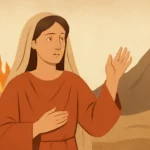
In John’s Gospel, Jesus addresses Mary with a directive that transposes care and kinship into the new community formed by the crucifixion: “Woman, behold your son!” and “Behold your mother.” The statement creates a new familial bond anchored at the foot of the cross. The beloved disciple is entrusted with Mary’s care, and Mary in turn becomes the spiritual mother of the disciple community. Some interpreters see this moment as emblematic of the broader church’s mission: under Jesus’ death, relationships and responsibilities are redefined, and the care of vulnerable persons—widowed or orphaned members of the community—becomes part of Christian discipleship. This utterance is often read as a practical act of solidarity, not only a personal farewell, marking a transition from Jesus’ public ministry to the post-resurrection community that will carry his instruction forward.
Distress and a cry of abandonment: Matthew 27:46; Mark 15:34
In the arid space between agony and death, Jesus vocalizes a question that has invited widespread theological reflection: “My God, my God, why have you forsaken me?” This Aramaic-informed cry references Psalm 22, inviting readers to hear Jesus’ death as a call to the Psalmist’s lament that culminates in trust and deliverance. The phrase invites discussions about the nature of Jesus’ participation in human suffering, including a sense of abandonment that some theologians interpret as a legitimate experience of alienation in the experience of crucifixion. Interpretive debates often center on whether this cry signals Jesus’ own sense of divine absence or functions as a faithful quotation that situates his death within the scriptural witness that points toward rescue and vindication in the long arc of salvation history.
In John’s Gospel, the simple statement “I thirst” adds a sensory dimension to the crucifixion narrative. It communicates physical deprivation and human vulnerability, while also bridging the moment to the Old Testament imagery of thirst as a symbol of longing for divine intervention. The response in John 19:29—“a sponge with sour wine” offered to Jesus—further connects this cry to the drama of fulfillment and the ongoing stripping away of superficial comforts at the hour of death. The juxtaposition of thirst with the subsequent act of receiving drink reinforces themes of both human need and divine providence, inviting readers to reflect on the ways God sustains people even in extreme suffering.
The declaration “It is finished” signals completion of Jesus’ redemptive work on the cross in the Gospel’s narrative arc. This phrase, often translated from the Greek tetelestai, resonates with the sense of a completed mission, a seal placed on a moment of cosmic significance. The word may also carry economic and legal overtones in the ancient world, suggesting that a debt has been paid in full or a contract has been fulfilled. The theological implications include the remission of sin, the accomplishment of the atoning work promised in the Old Testament, and the establishment of a new covenant that inaugurates the church’s mission to proclaim good news. The immediacy and finality of this utterance have made it a focal point for discussions about victory and the sufficiency of Jesus’ sacrifice.
Into your hands: Luke 23:46
The final cry, “Father, into your hands I commend my spirit,” presents a posture of trust. It frames Jesus’ death as a consecration and entrusting of life to the Father despite the preceding pain and confusion. Luke’s account emphasizes steadfast faith and surrender, inviting believers to reflect on their own practices of trust, especially in moments of loss, risk, or uncertainty. This phrase also resonates with themes of obedience, fulfillment of Scripture, and the transition from Jesus’ earthly work to the church’s ongoing mission in the Spirit. In liturgical and devotional contexts, this line often stands as an invitation to entrust one’s own life to God, even at the moment of death.
Harmonizing the sayings: chronology, symbolism, and interpretive methods
Scholars have long debated whether the seven sayings happened in a single linear sequence or if they reflect distinct moments across the crucifixion narrative. The Gospels do not present a single, unified timeline of Jesus’ words on the cross; rather, they reflect the different theological emphases of their authors. Some scholars propose a harmonized sequence based on the Gospel chronology, while others caution that the “seven sayings” should be read as thematic loci—moments that illuminate core aspects of Jesus’ mission: forgiveness, salvation, familial care, fulfillment of scripture, vulnerability, consummation, and surrender.
Two helpful ways to approach these texts are:
Considering each utterance within its Gospel’s literary context, recognizing that Luke emphasizes mercy and inclusive salvation, while John stresses the fulfillment of divine plan and community formation.
Reading the separate sayings as a theological staircase that begins with mercy, moves through salvation and relationship, confronts suffering, and ends in trust and surrender.
The cross sayings illuminate several central themes in Christian theology. The most frequently discussed include:
Mercy and forgiveness as a prior act of grace that precedes human repentance.
Salvation and assurance demonstrated in the thief’s encounter and promise of paradise.
Female care and community as Jesus entrusts Mary and the beloved disciple with new familial duties that shape the early church’s social ethics.
Fulfillment of Scripture through the Aramaic expression and the cry of lament, inviting interpretation as a moment of divine authentication of prophecy.
Human vulnerability revealed in thirst and in the sense of abandonment, while intertwined with divine sovereignty.
Completion and victory in the words “It is finished,” signaling not defeat but completion of a mission with redemptive purpose.
Trust and surrender demonstrated by Jesus’ final entrustment of life to the Father.
Historical and critical perspectives: how scholars read the sayings today
Modern scholarship approaches the cross sayings with a mix of historical, literary, and theological methods. Some key points in contemporary discussions include:
Textual variants and manuscript evidence show minor differences in the wording across Gospel accounts, but the overall content underscores a coherent portrait of Jesus’ crucifixion.
The language of the sayings reflects both Aramaic and Greek linguistic layers, illustrating the Gospel authors’ reception of Jesus’ words and their translation into the Greek-speaking world.
There is debate about whether the sayings were delivered as seven discrete statements or as a retrospective summary of Jesus’ words on the cross. Regardless of the exact sequence, the cross is presented as a powerful, symbolic act that reveals God’s mercy, faithfulness, and salvation plan.
Ethical and pastoral implications have been drawn from the sayings, particularly the call to forgiveness, mercy to the marginalized (the thief), and care for the vulnerable (Mary and the disciple).
Devotional significance and liturgical use
Across Christian traditions, the sayings from the cross have functioned as a resource for prayer, preaching, and reflection. Some notable devotional practices include:
Medieval and modern contemplative exercises that contemplate each saying as a doorway into trust, mercy, or intercession.
Liturgy and preaching series that use the “Seven Sayings” as a framework for a Holy Week sermon or for personal spiritual formation.
Artistic representations that pair each phrase with a symbolic image, fostering meditation on suffering, grace, and the mission of the church.
Verses and sources: a bibliographic guide for readers and researchers
For readers who want to locate the cross sayings in the biblical text and consult scholarly resources, here is a consolidated guide to the primary verses, followed by suggested commentaries and reference works for deeper study.
Primary biblical texts (canonical verses)
Luke 23:34 — “Father, forgive them, for they know not what they do.”
Luke 23:43 — “Truly, I tell you, today you will be with me in paradise.”
John 19:26–27 — “Woman, behold your son!” and “Behold your mother.”
Matthew 27:46 and Mark 15:34 — “My God, my God, why have you forsaken me?”
John 19:28 — “I thirst.”
John 19:30 — “It is finished.”
Luke 23:46 — “Father, into your hands I commit my spirit.”
Additional related phrases and variations appear in other Gospel traditions, including the Aramaic form Eloi, Eloi, lama sabachthani?, found in Matthew 27:46 and Mark 15:34, which is conventionally translated into the surrounding Greek text as “My God, my God, why have you forsaken me?” The interpretive discussions around these lines consider both their direct quotation from Psalm 22 and their function within the crucifixion narrative as a whole.
Scholarly commentaries and reference works
N. T. Wright, The Day the Revolution Began: Reconsidering the Meaning of Jesus’ Crucifixion — an exploration of the cross within the broader sweep of biblical theology.
John P. Meier, A Marginal Jew: Rethinking the Historical Jesus — provides context for the Gospel portraits and the crucifixion narratives.
Bart D. Ehrman, The New Testament: A Historical Introduction — offers a critical overview of textual transmission and the gospel portraits of the passion narratives.
Elizabeth A. Johnson, She Who Is: The Mystery of God in the Christian Faith — engages with theological implications of Christ’s crucifixion in relation to suffering and care for others.
D. A. Carson, The Gospel According to John (Commentary on the New Testament) — examines John’s distinctive portrayal of the crucifixion and its theological themes.
Common misconceptions and careful distinctions
As readers engage with the cross sayings, some common questions and misperceptions may arise. Here are a few clarifications to help situate the sayings within their narrative and theological framework:
Seven sayings vs. seven moments: Some traditions explicitly name seven phrases, while others see the sayings as representative of key moments in the crucifixion rather than a strict list spoken one after another. The important point is the themes, not an exact chronological order.
Exact wording across translations: Because translations vary (KJV, NIV, ESV, NRSV, etc.), exact phrasing can differ slightly. The sense across translations remains consistent: forgiveness, assurance, care, lament, thirst, fulfillment, and trust.
Aramaic vs. Greek: The direct utterance in Jesus’ mother tongue is likely Aramaic; some phrases appear via translation in Greek and thus may reflect a reception by the Gospel writers intended for a Greek-speaking audience.
Theological aims across the Gospels: While all four Gospels depict Jesus’ crucifixion, each writer emphasizes different theological priorities—Luke’s mercy, John’s fulfillment and community, Matthew/Mark’s lament and prophetic echo—without compromising the core message of the cross.
what these sayings teach about Jesus, about God, and about the church
The crucifixion narratives that include the sayings attributed to Jesus—from prayerful intercession to expressions of longing, surrender, and triumph—offer readers a composite portrait of hope in the midst of suffering. The sayings function as a theological ladder that invites believers to climb from human frailty to divine grace, from personal struggle to communal care, and from the pain of the moment to the promise of new life. By attending to the textual details, historical context, and theological significance of each utterance, readers can gain a richer understanding of the cross as a pivotal event in salvation history, a source of inspiration for ethical life, and a ground for confident trust in the God who, in the mystery of the cross, redeems and reconciles humanity to himself.
Additional notes for educators and readers: guiding questions and study prompts
How does each utterance shape your understanding of God’s mercy and human responsibility?
What does the relationship dynamic between Jesus, Mary, and the beloved disciple reveal about the early church’s social ethics?
In what ways does the cry of forsakenness interact with the idea of fulfillment of Scripture?
How can the “I thirst” and “It is finished” statements inform Christian preaching on suffering and redemption?







Deja una respuesta