Across Christian traditions, the question of When is Jesus Christ Second Coming has stirred curiosity, devotion, and thoughtful debate for centuries. This guide aims to present a clear, balanced, and historically informed overview of the topic, emphasizing that there are diverse yet coherent ways to approach it. We will explore key terms, biblical foundations, major interpretive frameworks, signs commonly associated with the event, and practical implications for faith and daily life. While many passages offer powerful imagery about the end times, most scholars and theologians agree that the core call for believers is not only to predict the moment but to live with hope, justice, and faithful readiness in the present.
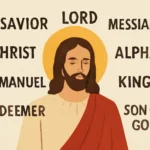
To study the second coming with clarity, it helps to understand the range of terminology used in Christian literature. Below are common terms, each carrying its own emphasis, and paired phrases that readers may encounter in theological works and sermons. Where relevant, bold terms indicate central concepts in this guide:
The Second Coming — the primary phrase used to describe Jesus’ future return to earth.
The Second Advent — essentially synonymous with the Second Coming, often used in older theological writing.
Parousia — the Greek term for the arrival or presence, frequently used in biblical studies to denote Christ’s return.
Christ's Return — a straightforward way to refer to the event from the perspective of Jesus himself.
Return of Jesus — a simple, descriptive phrase common in catechetical materials and sermons.
Day of the Lord — a broader biblical idiom that encompasses judgment and redemption around the same climactic moment.
Millennium-related terms — when discussed, phrases like millennium, thousand years, or reign of Christ often appear in relation to post- or pre-millennial interpretations.
Imminence — the theological idea that the return could occur at any time, shaping how believers live in the present.
Biblical foundations: what the scriptures say about the return
Most discussions about the return of Christ draw on a set of canonical texts from the New Testament. Broadly, these scriptures present the event as both a visible, public act and a mystery that requires faithful anticipation. They also emphasize that the timing is ultimately known by God, not by human calendars.
Key passages often cited include:
Matthew 24–25 — Jesus speaks about the signs of the end, readiness, and watchfulness.
Acts 1:10–11 — angels tell the apostles that Jesus will return “in the same way you saw him go into heaven.”
1 Thessalonians 4:16–17 — describes the trumpet blast and the catching up of believers to meet the Lord.
2 Thessalonians 2:1–12 — discusses the man of lawlessness and the timing of eschatological events in relation to the coming of the Lord.
Revelation 19:11–16 and related passages — vivid, symbolic depictions of Christ’s victorious return on a white horse.
Hebrews 9:27–28 and related texts — connect the return to themes of judgment and final accountability.
1 Corinthians 15:51–52 — speaks of the transformation of the living and the dead at the last trumpet.
In addition to these explicit passages, many scholars point to the broader biblical narrative: creation, sin, redemption, and the renewal of all things. Within this larger arc, the return of Jesus is understood not only as a future event but as the fulfillment of God’s promises and the consummation of salvation history.
Major interpretive frameworks: how Christians understand timing and sequence
Over the centuries, theologians have proposed several broad frameworks to understand When is Jesus Christ Second Coming, particularly regarding the order of events and their literal or symbolic meaning. While none of these views can claim universal agreement, each offers coherent insights within its own tradition.
Preterism — Many events described in prophecy are believed to have been fulfilled in the first centuries, notably in connection with events surrounding the destruction of Jerusalem in 70 CE. Contemporary preterists often interpret some passages metaphorically.
Futurism — A common approach in many Protestant and evangelical circles; most eschatological events are viewed as future, culminating in a literal, visible return of Christ and the final judgment.
Historicism — Prophetic events unfold throughout the course of church history, with signs and symbols appearing across eras; readers map biblical images onto historical milestones.
Idealism — Prophecy is understood as timeless spiritual principles rather than specific historical events; the struggles between good and evil illustrate ongoing patterns that point toward Christ’s ultimate victory.
Within these broad positions, individual traditions (Catholic, Orthodox, Protestant, Pentecostal, Ethiopian, and others) emphasize different aspects of the same biblical witness. A useful approach for readers is to study primary texts, then explore how different communities interpret those texts in light of their doctrinal commitments and historical contexts.
Signs, seasons, and the question of timing
One of the most discussed topics in relation to When will the second coming occur is whether certain signs indicate an approaching moment. The New Testament repeatedly calls believers to be watchful rather than to set a precise date. Below are frequently cited categories of signs and themes, presented with careful distinctions between interpretation and doctrine.
Gospel proclamation to all nations — The spread of the good news is a recurring motif in expectations of the end times. Some readers treat this as a present ongoing mission, while others link it to a climactic moment before Christ returns.
Wars, natural disasters, and upheaval — Apocalyptic language often uses cosmic and social upheaval to signify a pivotal period, yet the exact chronology remains uncertain.
Abomination of desolation and related figures — A phrase tied to prophetic imagery in Daniel and Jesus’ Olivet Discourse; its precise reference is debated among scholars.
Perseverance of the believers — Beholding a community that remains faithful amid trials is presented as essential, regardless of when the event will happen.
Final judgment and the inauguration of a new creation — Many traditions connect the end times to a decisive act of divine judgment and the renewal of all things.
Crucially, the literature consistently elevates two principles over exact chronology: watchfulness and faithful living. The insistence on not knowing the day or hour (Matthew 24:36) invites readers to live with ethical seriousness and hopeful expectancy—without succumbing to sensationalism or date-setting.
Rapture, tribulation, and the millennium: common debates
Two clusters of debates frequently arise in discussions about the end times: the relationship between the rapture (if any), tribulation, and the return of Christ, and the interpretation of the millennium.
Pre-tribulation rapture — The church is taken up before a severe period of tribulation. This view emphasizes divine protection and eager anticipation for deliverance from hardship.
Mid-tribulation rapture — The church is taken up during the middle of a tribulation period, often interpreted as a test or purification before Christ’s public return.
Post-tribulation rapture — The church endures the tribulation and is gathered to Christ at the time of his return, highlighting steadfast faith under pressure.
Parallel to this discussion is the question of the millennium (the thousand-year reign of Christ referenced in Revelation 20). Interpretations include:
Premillennialism — Christ returns before (pre-) a literal thousand-year reign on earth.
Amillennialism — The millennium is understood symbolically as the present era of the gospel and the church’s witness; a literal earthly reign is not the central reading.
Postmillennialism — The gospel gradually expands and brings about a future victory, followed by Christ’s return.
Each position offers a framework for understanding the Bible’s imagery, but none resolves every question about the timing with complete consensus. A careful reader will acknowledge the diversity of Christian thought while focusing on core commitments like faith, hope, and love as lived expressions of the gospel.
Hermeneutical approaches: how scholars interpret prophecy
Prophecy in the Bible often uses symbolic language, apocalyptic imagery, and historical resonance. Because of this, readers employ different hermeneutical methods to interpret prophetic passages. Some guiding principles include:
Literal vs. symbolic interpretation — Recognizing that some images are meant literally (e.g., the return of Jesus) and others symbolically (e.g., beasts, numbers, or figures of judgment).
Contextual reading — Interpreting passages within their historical, literary, and theological contexts rather than isolating verses.
Progressive revelation — Understanding later biblical books in light of earlier ones, while acknowledging that full comprehension may require synthesis across multiple texts.
Theological coherence — Ensuring that interpretations fit central Christian convictions about God, creation, salvation, and the ethical life.
Readers should approach prophecy with humility, recognizing both the depth of biblical witness and the limitations of human knowledge. A careful, prayerful study often yields richer insights than sensational headlines or dogmatic timelines.
Practical implications: how belief about the return shapes daily life
Even when the exact moment of the return of Christ is uncertain, the doctrine carries significant moral and spiritual weight for believers. Here are practical ways that eschatological belief can influence living:
Hope and perseverance — A confident hope about future reunion with God sustains endurance in suffering, injustice, and personal trial.
Ethical urgency — Readiness implies a commitment to justice, mercy, and the transformation of society toward shalom, not merely private piety.
Humility about certainty — While curiosity about timelines is natural, the emphasis on humility helps communities avoid divisive quarrels over exact dates.
Pastoral care — In times of crisis or grief, eschatological language can offer comfort about the ultimate resolution of life’s pain and the vindication of the righteous.
Hopeful exclusivity vs. inclusivity — The return of Christ invites believers to extend hospitality, reconciliation, and evangelistic witness across divisions while remaining faithful to their own convictions.
Throughout church history, many Christian communities have integrated eschatology with liturgy, prayer, and social action. The aim is not to speculate arbitrarily about dates but to cultivate lives that reflect the values of the coming reign—justice, mercy, peace, and love for neighbor.
Common questions and misconceptions: clarifying the conversation
As with any complex topic, there are frequent questions and misunderstandings. Here are some clarifications that can help readers navigate common points of confusion related to When is Jesus Christ Second Coming and its related themes:
Is it possible to know the exact date? — Most Christian traditions teach that no one knows the day or hour, except God alone. Dates, calculators, or online predictions should be viewed with caution and tested against biblical humility.
Will there be a rapture separate from the return? — Views differ on whether a rapture occurs before, during, or after a period of tribulation. This is a debated topic among Christians, but it does not nullify the core hope in Christ’s eventual return.
Does the Second Coming mean the world ends immediately? — Many traditions see the return as the culmination of redemptive history that leads to judgment and the renewal of all things, rather than a sudden annihilation of the created order.
How should Christians read symbols like the Beast or the number 666? — Interpretive methods vary; some read these images historically, others theologically, and some read them as timeless archetypes of conflict between good and evil.
What about the millennium? — The question of a literal thousand-year reign is closely tied to one’s broader eschatology. Different Christian families hold distinct, yet respectful, perspectives.
Guided study: how to engage with eschatology responsibly
If you want to study the return of Christ in a rigorous and balanced way, here are steps that can help:
Read primary texts carefully — Start with the New Testament passages most often associated with the return, such as Matthew 24–25, 1 Thessalonians 4–5, and Revelation 19–22, reading them in their context.
Consult multiple perspectives — Compare at least a few scholarly voices from different traditions to see how interpretation arises from different theological commitments.
Differentiate doctrine from speculation — Separate essential beliefs (the hope and rapture of Christ, the final judgment) from speculative timelines or sensationalist claims.
Practice discernment in media consumption — When encountering sensational eschatology in books, blogs, or podcasts, evaluate sources for scholarly grounding, hermeneutical method, and theological moderation.
Engage ethical implications — Translate study into actions that promote justice, mercy, and peace in one’s community, in line with the gospel values of the coming kingdom.
Recommended readings and resources
For readers who wish to explore more deeply, several categories of resources can be helpful. Always consider the credibility of sources and the tradition they represent. The following suggestions are intended to be starting points rather than definitive catalogues:
Canonical biblical commentaries on the Gospels and Revelation for historical context and literary analysis.
Systematic theologies that address eschatology within the broader framework of Christian doctrine (creation, sin, salvation, and Christ’s work).
Historical church writings that present classic interpretations from early church fathers to medieval scholars, illustrating how views have evolved.
Contemporary ecumenical discussions that foster respectful dialogue among different Christian traditions about end-times themes.
Scholarly journals and essays that examine hermeneutics, apocalyptic literature, and the social implications of eschatology.
Some introductory texts emphasize theological clarity and pastoral sensitivity, which can be especially valuable for readers new to the topic. Others offer a more technical, exegetical approach for advanced study. Regardless of the chosen path, the central aim remains constant: to understand what the Bible teaches about the return of Jesus and to respond with faith, hope, and ethical action in the present world.
keeping the focus on faithful living
In conclusion, the When is Jesus Christ Second Coming question invites us into a broader conversation about faith, history, and the future God intends for creation. While precise chronology remains elusive for most readers and traditions, the consensus across many Christian communities is clear: the return of Christ is a future certainty that should shape our present lives. The emphasis is not solely on predicting the moment but on embodying anticipatory faith—loving God and neighbor, pursuing justice, practicing mercy, and living as witnesses to the coming kingdom.
By recognizing the diversity of interpretation while holding fast to core biblical themes—Christ’s ultimate victory, the renewal of all things, and the call to faithful obedience—believers can engage with eschatology in a way that is both intellectually honest and pastorally nourishing. Whether you encounter this topic through the language of the Second Coming, the Second Advent, the Parousia, or the Day of the Lord, may your study lead to greater reverence for God, greater compassion for others, and a more steadfast commitment to living out the gospel in every season of life.











Deja una respuesta