Life After Died: A Comprehensive Guide to What Happens After Death
Death is the final frontier of the human experience, and the question what happens after death has occupied minds, hearts, and cultures for millennia. This article offers a thorough exploration of the topic from multiple angles: scientific viewpoints, philosophical debates, religious and cultural beliefs, near-death experiences, and practical considerations for the living. Whether you approach the subject from curiosity, faith, skepticism, or a personal need to cope with loss, this guide aims to illuminate the breadth of ideas without claiming a single definitive answer. We will use a spectrum of terms to describe the phenomenon—life after death, the afterlife, posthumous existence, consciousness after death, and life beyond the grave—to reflect the diversity of perspectives that people hold today.
Throughout this article, key ideas will be emphasized in bold to help you identify recurring themes and useful concepts. The goal is not to proselytize a particular belief but to present a balanced, evidence-informed overview that respects different worldviews and personal experiences. The journey through death and what comes next is as much about understanding human hope and vulnerability as it is about intellectual inquiry.
Definitions and Core Concepts
Before diving into the many viewpoints, it helps to clarify some terms that are often used interchangeably but may carry different nuances in different contexts:
Life after death — the general idea that consciousness or personal identity continues beyond physical death.
The afterlife — a broad category that may include heavenly realms, reincarnational cycles, eternal oblivion, or other spiritual planes according to various traditions.
Consciousness after death — a focus on whether awareness persists post-mortem, and if so, in what form.
Posthumous existence — a more neutral term describing continued existence without assuming a particular mode or place.
Resurrection — a belief that the body or person will be restored in some form at a future point, often tied to religious eschatology.
These terms help organize the conversation, but they also reveal a fundamental tension: what counts as evidence, and what counts as meaning. Different cultures answer these questions with their own stories, rituals, and philosophical frameworks. In the sections that follow, you will encounter a spectrum of positions—from empirical skepticism to metaphysical commitment—alongside practical guidance for living with the reality of mortality.
Historical and Cultural Perspectives
Across time and geography, people have imagined life beyond death in distinctive ways. Understanding these traditions enriches our sense of what humans seek when confronting mortality:
Ancient Civilizations
In ancient Egypt, for example, the journey after death was a carefully navigated rite of passage involving mummification, judgment before the gods, and a guarded path to the Field of Reeds, a paradisiacal mirroring of daily life. In ancient Mesopotamia and the broader Near East, concepts of the underworld were often somber and shadowy, yet imbued with the possibility of memory and ongoing influence. The Greeks and Romans imagined a tiered afterlife—parts of which could be pleasant or unpleasant depending on one’s deeds—while still acknowledging some form of continuity of identity, even in realms beneath the surface of the living world.
Eastern Traditions
Across Hindu, Buddhist, Jain, and Sikh horizons, the cycle of birth, death, and rebirth—often summarized as rebirth or samsāra—dominates metaphysical explanations. The idea that actions in this life shape future existences is linked to the law of karma. In these frameworks, the focus is not only on what comes after death but on how living with virtue, mindfulness, and ethical intention can influence future states of being. In some strands, liberation or enlightenment—moksha or nirvana—offers a path out of the cycle altogether, transforming death into a doorway rather than a destination.
Western Traditions
In Western cultures, Christian, Jewish, and Muslim thinkers have long debated the nature of the afterlife, incorporating ideas such as eternal life, judgment, and resurrection. Each tradition provides its own narratives about heaven, hell, purgation, or a moral reckoning after death, while also offering ritual practices—prayers, rites of passage, and remembrance—that help the living process grief and meaning. Parallel streams in secular Europe and the Americas have emphasized humanist or philosophical conceptions of death, prioritizing memory, legacy, and ethical living as a form of continued influence beyond death.
Indigenous Beliefs
Many Indigenous peoples around the world hold cosmologies in which the dead maintain relationships with the living, often through ancestors, spirits, or guardians. An important feature of these worldviews is the integration of death into everyday life—honoring memory through ceremonies, songs, and place-based rituals that keep connections with late loved ones alive in communities and landscapes.
Across these diverse histories, a common thread appears: death is interpreted not merely as an end but as a transition that is integrated into moral life, cultural memory, and communal identity. The following sections explore how contemporary thinkers interpret these transitions in light of science, philosophy, and personal experience.
The Big Theories About What Happens After Death
People have proposed a wide range of models to explain the fate of consciousness and the person after death. Here are the major families of theories, presented with the aim of clarity and fair representation:
Materialist or naturalist view — Consciousness arises from brain activity and ceases when the brain stops functioning. The death of the mind is permanent, and there is no afterlife in the sense of continued personal experience. Proponents emphasize empirical evidence from neuroscience and underscore the limits of human perception in confirming anything beyond physical death.
Dualist or spiritualist view — Mind or soul exists independently of the body and can continue after physical death. This broad category includes religious, metaphysical, and personal spiritual interpretations where consciousness persists in some form, whether in a heavenly realm, a non-corporeal plane, or a gradual transition to another mode of existence.
Reincarnation and karma — The self or consciousness undergoes successive lives, often influenced by actions in prior lives. The experience of rebirth continues until a state of liberation or enlightenment is reached. This view is central in Hinduism, Buddhism, Jainism, and certain sects of Sikhism, with variations in mechanism and purpose.
Resurrection and judgment — Some traditions hold that the body or person will be raised at a future time for judgment, after which a permanent condition of reward or punishment is assigned. This framework often emphasizes ethical accountability and divine sovereignty.
Transitional or non-dual perspectives — Some contemporary philosophies propose that death is not a binary event but a transition into a different mode of being (for instance, a continuation of consciousness in a non-physical dimension) or a dissolution of self into a larger unity. These views frequently resonate with mysticism or panpsychist ideas about the nature of reality.
Each theory has its own grounds for appeal and its own challenges. For example, empirical scrutiny faces the problem of investigating non-physical phenomena, whereas metaphysical accounts must grapple with questions about the nature and origin of consciousness. Many people hold a personal synthesis that blends elements from several traditions while remaining grounded in their own experiences and values.
In practice, the question of what happens after death is not just about metaphysical beliefs; it also shapes how individuals live, grieve, and build meaning today. The next sections explore paralleled lines of inquiry—experience-based evidence, ethical implications, and the living person’s journey.
Near-Death Experiences and What They Show
Near-death experiences (NDEs) have become a focal point in contemporary discussions about life after death. They are reports from people who have been clinically close to death or temporarily dead and then revived. While NDEs are intriguing, they are not uniform and are often interpreted within broader frameworks. Here are common elements reported across many accounts:
Out-of-body experiences — A sense of detachment from the physical body and observing events from an external perspective.
Tunnel or light imagery — Movement through a dark or narrow space toward a luminous center.
Life review — A rapid, panoramic replay of one’s life, sometimes involving emotional evaluation.
Feelings of peace or love — A pervasive sense of calm, warmth, or acceptance.
Encounter with beings — Perceived encounters with deceased relatives, spiritual figures, or guides.
Ambiguity and interpretation — After resuscitation, people may reinterpret their experiences through religious or philosophical lenses.
Scholars urge caution: NDEs are real subjective experiences, but they do not by themselves prove the existence of an afterlife. Several explanations—neurochemical changes, hypoxic states, or cognitive processing during trauma—offer plausible accounts. Yet many people report transformative shifts in values, purpose, and compassion after an NDE, suggesting that even if the experience is brain-based, its life-altering effects can be genuine and meaningful.
For those who study or experience these events, the central questions remain: What do these experiences reveal about consciousness? Do they hint at something beyond the brain, or do they teach us about human perception under extreme stress? The nuanced answer is that NDEs enrich the conversation without delivering definitive empirical proof of a specific afterlife model.
Scientific and Philosophical Perspectives
Science and philosophy approach the question of life after death from different angles. While science is anchored in observable, testable phenomena, many philosophers acknowledge that certain aspects of dying and death may lie beyond current empirical reach. This section outlines what is known, what remains debated, and how thoughtful inquiry can inform personal beliefs:
Neuroscience and biology — The brain generates perception, memory, and identity. When brain activity ceases, subjective experience as we know it typically ends. This framework supports the materialist perspective, while acknowledging the possibility that some aspects of consciousness might be emergent or not yet understood.
Philosophical arguments about consciousness — Debates range from physicalism (consciousness fully arises from physical processes) to panpsychism or other non-reductive theories. These discussions keep the door open to scenarios that challenge conventional assumptions about death and mind.
Epistemic humility — Acknowledging the limits of what we can know about subjects beyond empirical verification encourages careful discourse and compassionate uncertainty. It also invites respectful dialogue among scientists, theologians, and lay readers alike.
Ethical and existential implications — How one views the possibility of life after death can influence moral choices, care for the dying, and how communities support those who grieve. Even without definitive proof, beliefs about the beyond can shape lived values and daily conduct.
Some scholars argue that modern science can productively engage with questions about the afterlife by focusing on the phenomenology of dying, the psychology of belief, and the social dimensions of mourning. Others caution that conflating scientific uncertainty with spiritual certainty can blur the boundary between epistemology (what we can know) and faith (what we choose to trust). The result is a rich, ongoing conversation that respects both empirical rigor and personal experience.
Religious and Spiritual Frameworks
Religious and spiritual traditions offer structured narratives about life after death, often accompanied by rituals, moral guidance, and communal support. While no single account dominates in a pluralistic world, here is a compact overview of how some major traditions approach the question of what comes next:
Christian perspectives
Beliefs in eternal life through faith in God and acceptance of divine grace.
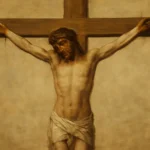
Concepts of , heaven, hell, and, in some denominations, purification or purgation after death.
Rituals such as prayer for the departed and memorial services that sustain memory and community solidarity.
Islamic perspectives
Belief in a day of judgment and the reassembly of the self for accountability before God.
Narratives of paradise (Jannah) and punishment (Jahannam) as outcomes based on deeds and intention.
Ritual practices, prayers for the dead, and the importance of leaving a virtuous legacy.
Hindu and Buddhist perspectives
In Hinduism and Buddhism, the cycle of samsāra and the force of karma shape future exists. Liberation (moksha) or enlightenment (nirvāṇa) represents a release from suffering and cyclic birth.
Rituals emphasize remembrance, purification, and guidance for the soul’s onward journey.
Judaism and other traditions
Judaism presents a range of beliefs about the afterlife, from a focus on this-worldly justice to more eschatological expectations in various streams.
Indigenous and modern spiritual paths often emphasize continuity of memory, ancestral presence, and ethical living as forms of ongoing influence beyond death.
Across these frameworks, several recurring motifs appear: justice, compassion, remembrance, and ethical living as ways to honor the dead and to shape the living. The diversity of beliefs reflects both the mystery of mortality and the many ways people find meaning in the face of it.
The Living: Coping with Loss and Preparing for the End
How we think about life after death is deeply connected to how we grieve, remember, and plan for our own mortality. This section addresses practical and emotional aspects that can help individuals and communities navigate loss with care and resilience:
Grief, meaning, and growth
Grief is a natural response to loss, and it often intersects with questions about what happens after death. People may notice shifts in priorities, relationships, and sense of purpose. Some find solace in narratives that honor the deceased’s memory, while others seek meaning through community service, creative expression, or spiritual practice. It is common to experience a mix of sorrow, relief, anger, and gratitude as part of the healing process.
Rituals provide structure during one of life’s most vulnerable moments. They help codify memory, offer social support, and reaffirm shared values. Rituals can include:
Funerals or memorial services that bring people together to share stories and pay tribute.
Periodical remembrances—anniversaries, birthdays, or feast days that honor the deceased.
Personal acts of memory—journaling, creating a memory box, planting a tree, or contributing to a cause the deceased cared about.
Thinking about what remains after we die often prompts people to consider their values and the kind of impact they want to have. Legacy can be tangible—financial planning, written works, community projects—or intangible—lessons, kindness, and the preservation of memory. By framing life as an opportunity to contribute to something larger, individuals can move through grief toward a sense of continuity and purpose.
For caregivers and professionals, it is important to acknowledge the spiritual and existential dimensions of death while respecting diverse beliefs. Providing space for questions, offering compassionate listening, and supporting personal beliefs—even when they differ from one’s own—are essential components of dignified care.
In the broad conversation about death and what follows, several myths circulate. Distinguishing fact from metaphor can prevent confusion and reduce fear. Here are a few widely encountered assumptions, paired with clarifying notes:
Myth: There is only one universal afterlife. Reality: Beliefs vary widely across cultures; some traditions emphasize heaven or hell, others focus on reincarnation, and some propose no continued consciousness at all.
Myth: Near-death experiences prove the existence of an afterlife. Reality: NDEs are powerful personal experiences that are often interpreted within a cultural or religious framework, but they do not constitute universally verifiable evidence.
Myth: If I think positively, nothing bad will happen to me after death. Reality: Positive thinking can influence coping and resilience, but it does not guarantee outcomes beyond life. Beliefs about the afterlife are not a guarantee against suffering.
Myth: Death is a solitary, purely personal matter. Reality: Death is often experienced within a social and communal context, shaping families, communities, and cultural memory.
Engaging with these myths critically can help in communicating with others, reducing fear, and supporting healthier conversations about death and dying.
Practical Guidance: Questions, Conversations, and Resources
Whether you are exploring for yourself or helping others, the following practical considerations can be useful. The aim is to approach the topic with openness, respect, and a readiness to listen:
Ask thoughtful questions about beliefs, experiences, and emotions. Encourage stories, not arguments.
Respect diverse perspectives—a single article cannot capture every tradition or personal stance. Curiosity is more important than conclusive answers.
Create spaces for dialogue—family discussions, support groups, or community forums provide opportunities to share fears and hopes in a supportive setting.
Support coping strategies—grief counseling, spiritual care, mindfulness, and creative expression can all help people move through loss in healthy ways.
Plan ahead—end-of-life planning, such as advance directives and preferred ceremonies, can alleviate burden on loved ones and align outcomes with personal values.
In practical terms, the question of life after death often enters daily life when faced with illness, aging, and the loss of loved ones. Providing compassionate care, listening without judgment, and honoring the deceased’s preferences and cultural practices are essential ways to navigate this terrain with dignity.
Frequently Asked Questions (FAQ)
Below are concise answers to common inquiries that arise in discussions about the afterlife. These entries are not endorsements of any single view but invitations to thoughtful reflection.
Q: Does science prove or disprove the existence of an afterlife?
A: Science explains natural processes in the physical world but does not currently provide a definitive verdict on metaphysical claims about consciousness after death. This gap leaves room for personal interpretation and philosophical debate.
Q: Can belief in the afterlife comfort the grieving?
A: For many people, beliefs in continuity after death offer hope and structure for mourning. For others, skepticism can also be a source of peace by focusing on the living’s responsibilities and memories.
Q: How should I talk about death with children?
A: Use honest, age-appropriate language; invite questions; and provide reassurance that feelings are normal. Cultural and family beliefs can guide the framing of conversations about mortality and meaning.
Q: Is there a single right answer to what happens after death?
A: No universal consensus exists. A diverse spectrum of beliefs reflects human experience, culture, and imagination. The most helpful approach is to cultivate respect for differences while seeking personal truth.
“Life after death” remains one of humanity’s most enduring puzzles. Across cultures and disciplines, people have pursued it with curiosity, reverence, and a longing for meaning. Whether you lean toward a scientific worldview, a spiritual framework, or a personal synthesis of ideas, the essential message is consistent: death prompts us to consider how we live, how we remember, and how we treat one another. The question is not only about the beyond but about the significance of our time here and now. By exploring various variations of the life after death question, we can cultivate a more compassionate, thoughtful approach to loss, hope, and the ongoing story of human consciousness.
In all its forms—the afterlife, posthumous existence, life beyond the grave, or the quiet end of experience—the discourse invites reflection, dialogue, and care. This guide has aimed to present a comprehensive panorama, offering pathways for inquiry, ritual, and resilience as you navigate the profound terrain of mortality and meaning.
Remember: while beliefs about what happens after death may diverge, the shared human response—compassion for the living and reverence for the dead—binds us in a common pursuit of understanding, dignity, and hope.