Why Does Peter Deny Jesus? A Biblical Analysis of Peter's Denial and Its Significance
Why Does Peter Deny Jesus? A Biblical Analysis of Peter's Denial and Its Significance
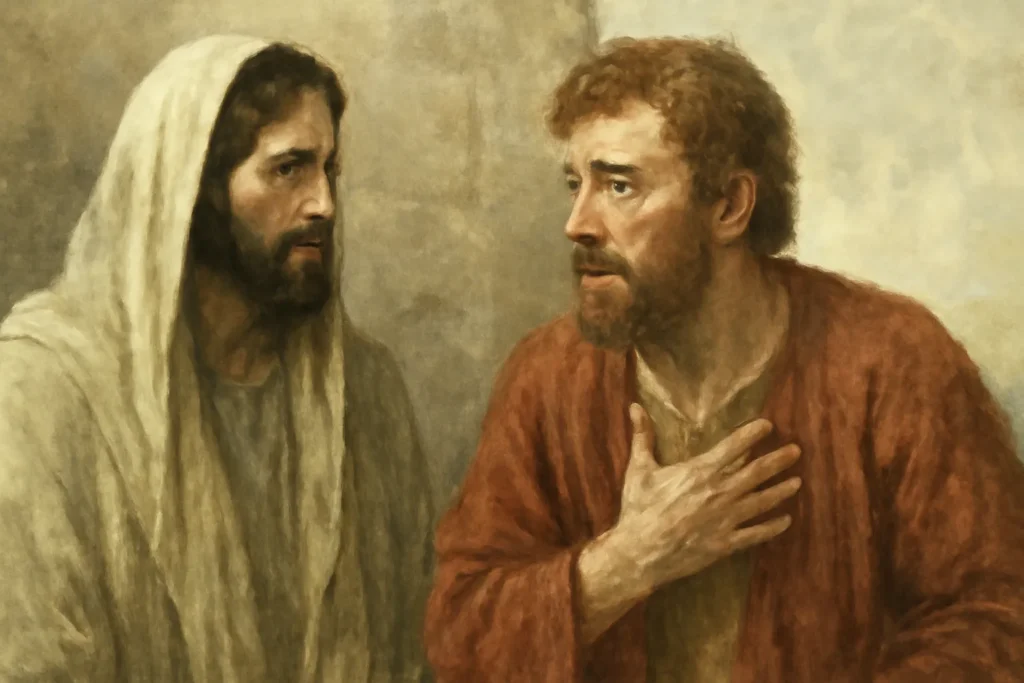
The question “Why does Peter deny Jesus?” has echoed through Christian history as one of the most human and compelling moments in the Gospel narratives. This article offers a biblical analysis of Peter’s denial, its psychological dimensions, and its enduring theological significance. We will explore how the Gospels describe the episode, what it reveals about Peter as a disciple, and how the event fits into the larger arc of the New Testament story — from fear and failure to restoration and mission. Throughout, we will consider variations of the question — why did Peter deny Jesus?, why does Peter deny the Lord?, and what explains Peter’s denial — to illuminate the many facets of this pivotal moment.
Peter’s denial does not occur in a vacuum. It unfolds against a backdrop of intense emotion, social pressure, and prophetic expectation. Jesus had predicted that his closest followers would desert him in the hour of trial, and Peter, confident in his loyalty, made a bold public statement about his fidelity. The contrast between Peter’s public confidence and his subsequent private fear forms the heart of the narrative tension. In this section we will outline the context and the emotional milieu in which the denial arises.
The Predictions and the Pressure of the Moment
A crucial driver behind the denial is the moment’s intensity. Jesus warned his disciples that a severe test was imminent, and Peter, eager to affirm his loyalty, offered a blanket vow. The gospel writers note that the moment of truth arrived under the glare of hostility, with murmuring crowds, soldiers, and a high-stakes trial. The social and political pressure of the nighttime arrest and the looming danger to Peter himself created a high-risk environment for a faith-filled response transformed into fear-driven denial.
Variations of the Claim: What It Means to Deny
In studying the question, we encounter several nuanced ideas wrapped into the single act of denial. Some scholars describe Peter’s response as a fear-driven rejection; others emphasize a moment of faltering loyalty under pressure; still others highlight a prophetic realism that Peter could not fully comprehend at that hour. The phrase “Why does Peter deny Jesus?” thus opens up a spectrum of explanations that are not mutually exclusive.
The Denial in the Gospel Accounts
Matthew’s Account
In Matthew 26:69-75, Peter’s denial is introduced by a subordinate circumstance: a servant girl confronts him and he denies knowing Jesus. He then denies again to another bystander, and a third time, with the rooster crowing, fulfilling Jesus’ prediction. The narrative emphasizes Peter’s fear of association with Jesus during a dangerous, accusatory environment. The pastoral concern in Matthew’s portrayal is less about psychology and more about the theme of recognition and restoration that follows in the Gospel.
In Mark 14:66-72, the timeline and motion of events are similar to Matthew’s, but Mark adds a vivid sense of immediacy and a tightening of the dramatic arc. Mark emphasizes Peter’s thrice-repeated denial and its connection to the rooster’s crow as a stark sign of misalignment between intention and action. The emphasis here is often read as a portrayal of human weakness and the abrupt interruption of loyalty by fear.
Luke’s Account
Luke presents the scene with its own distinctive tone in Luke 22:54-62. He records that Peter’s first denial comes when a bystander accuses him, and the narrative includes a more explicit emphasis on righteous fear and the social risk of being identified with Jesus. Luke’s account also highlights the possibility of ultimate restoration, a theme that remains central to the Luke-Acts trajectory.
John’s Account
In John 18:15-27, the denial narrative is layered with the presence of the beloved disciple and the high-priestly setting. John’s portrayal is less focused on the rooster and more on the personal moment in which Peter’s loyalty is put to the test in the courtyard. The emphasis here is on threat, fear, and a moment of human frailty, even as the disciple’s relationship with Jesus remains central to the broader Johannine theology of witness and steadfastness.
Across these four accounts, the core event remains: Peter’s denial of Jesus in the hours surrounding Jesus’ arrest. Yet the gospel authors frame the moment with their distinct theological aims, offering complementary perspectives that together enrich our understanding of the question “Why did Peter deny Jesus?”.
Why Did Peter Deny Jesus? Theological and Psychological Dimensions
To explore the why behind Peter’s denial, we must consider both human psychology and theological interpretation. The episode invites readers to reflect on how fear, pride, zeal, confusion, and hope can interact in a moment of crisis. Several key dimensions emerge:
Fear and Self-preservation: The risk of persecution or violence against Jesus’ followers could lead to a quick, defensive denial as a protective reflex.
Imperfect Courage: Peter’s bold assertion earlier in the evening contrasts with a moment when courage was hard to sustain under threat.
Prophetic Timing: Jesus had warned that the test would occur; Peter’s denial reveals the gap between human readiness and prophetic expectation.
Group Dynamics: In the crowd, the pressure to conform and not become a marked target can override private loyalties.
Messianic Misunderstanding: Some readers argue that a misreading of Jesus’ mission may have contributed to confusion and fear in the moment.
From a theological perspective, the denial is not merely a lapse; it serves as a crucible for the conversion of Peter’s mission. The episode foreshadows how Jesus’ followers must learn to depend on divine grace rather than brute strength. The narrative invites readers to consider the relationship between human frailty and divine mercy.
As researchers and theologians examine the question, they often recast it in several variations:
Why does Peter deny Jesus? in the face of imminent danger.
What explains Peter’s denial?— a combination of fear, pressure, and misreading the moment.
How does Peter’s denial relate to Jesus’ prediction?— fulfillment and human limitation intersecting with divine plan.
What is the significance of Peter’s denial for Christian discipleship?— a mirror for all believers who face trials of faith.
Consequences and Significance: What the Denial Teaches About Faith and Failure
The denial carries weight beyond the historical moment. It prompts questions about human fallibility, the integrity of witnesses, and the possibility of restoration. Several layers of significance emerge:
A real account of human weakness: The Gospels do not sanitize Peter’s reaction; they present a candid portrait of fear in a dangerous hour.
Fulfillment of prophecy and the test of loyalty: Jesus’ prior predictions are validated in the narrative, but the arc points toward repentance and continued service.
Mercy and restoration as core themes: The events pave the way for Jesus’ later restoration of Peter (the “feed my sheep” scene) and underscore the gospel’s message of grace.
Discipleship under pressure: Christian discipleship is not a guarantee against failure; rather, it is a call to learn from failure and receive grace for reconciliation.
In this sense, the denial is not the end of Peter’s story but a turning point that leads to a deeper dependence on Christ and a more robust mission in the church. The narrative stance invites readers to examine their own moments of fear and to consider how divine forgiveness can operate within flawed human lives.
From Denial to Restoration: Peter’s Journey Forward
A pivotal transformation occurs after the denial. The Gospel accounts culminate in a sequence that highlights restoration, commissioning, and renewed fidelity. The most well-known passage is John’s restoration scene, where Jesus directly addresses Peter after resurrection and invites him to shepherd the flock. This transition from failure to mission supplies a powerful message: grace precedes vocation, and God can turn weakness into strength for greater purposes.
The Restoration in John 21
In John 21, Jesus asks Peter three times, “Do you love me?”, aligning with Peter’s three denials and restoring him through a triple affirmation of love and responsibility. The dialogue culminates in a commission: Peter, feed my sheep. This reconciliation demonstrates a central biblical pattern: mercy transforms failure into renewed service, and the launch of a transformative mission emerges from a place of vulnerability.
Broader Implications for the Early Church
Peter’s restoration becomes a model for how early Christian communities approached leadership, accountability, and mercy. The narrative invites believers to recognize that leaders can falter, yet their vocations can be reaffirmed through repentance, grace, and continued service. The dynamics also illuminate the church’s trust in a forgiving, redeeming God who uses imperfect vessels to carry forward the mission.
Common Misunderstandings and Clarifications
Several misunderstandings often accompany discussions about Peter’s denial. Clarifying these points helps sharpen the interpretation:
Denial versus apostasy: The event is commonly described as a denial rather than a complete renunciation of faith. Peter remains a disciple in the arc of the narrative, albeit wavering in the moment.
Harsh judgment versus pastoral diagnosis: The Gospels do not celebrate the failure but diagnose the human condition in a way that invites compassionate response from readers.
Prophetic fulfillment versus fatalism: While the denial fulfills Jesus’ prediction, the storyline emphasizes that human failure can be overcome by grace, not that it is the final word.
Another common question concerns whether Peter’s denial was avoidable or inevitable. The text invites readers to recognize both the inevitability of human fear in crisis and the possibility of reform and restoration through grace. The nuanced portrayal resists a simplistic binary of certainty or failure.
The question why does peter deny jesus continues to resonate for modern readers who face trials and moral choices. Several practical lessons emerge for individuals and communities:
Humility in leadership: Leaders should acknowledge their limits and seek accountability and grace when tested.
Relying on grace over strength: The narrative invites believers to trust in divine grace rather than personal prowess under pressure.
Repentance as a pathway to service: Failure can catalyze a renewed commitment that strengthens the church’s mission.
Compassion in correction: The community's response to failure should balance truth-telling with mercy, modeled by Jesus and the early church.
The repeated emphasis on restoration and vocation provides a robust framework for pastoral care, catechesis, and spiritual formation in faith communities today.
The question Why does Peter deny Jesus? invites a multifaceted exploration of human psychology, biblical history, and the sufficiency of divine grace. The denial itself is less a point of condemnation and more a doorway into a larger narrative: a story of transformation, forgiveness, and renewed purpose. Across the four Gospels, Peter’s denial is presented not to shame him but to set the stage for a dramatic recovery that would shape the Christian movement’s understanding of leadership, repentance, and resilience. The event underscores a core biblical principle: human weakness is not the final word; God’s mercy can reorient a life toward service, even after profound failure.
In the end, Peter’s denial and its subsequent restoration illuminate a timeless truth: faithfulness is not measured by perfect recall of one moment, but by the ongoing trust in God’s redemptive work. The question itself—why did Peter deny Jesus?—encourages believers to examine their own fears, to lean into grace, and to participate in a mission that transcends personal capability. The narrative remains relevant for readers who seek to live with integrity, courage, and hope in the face of life’s trials.










Deja una respuesta