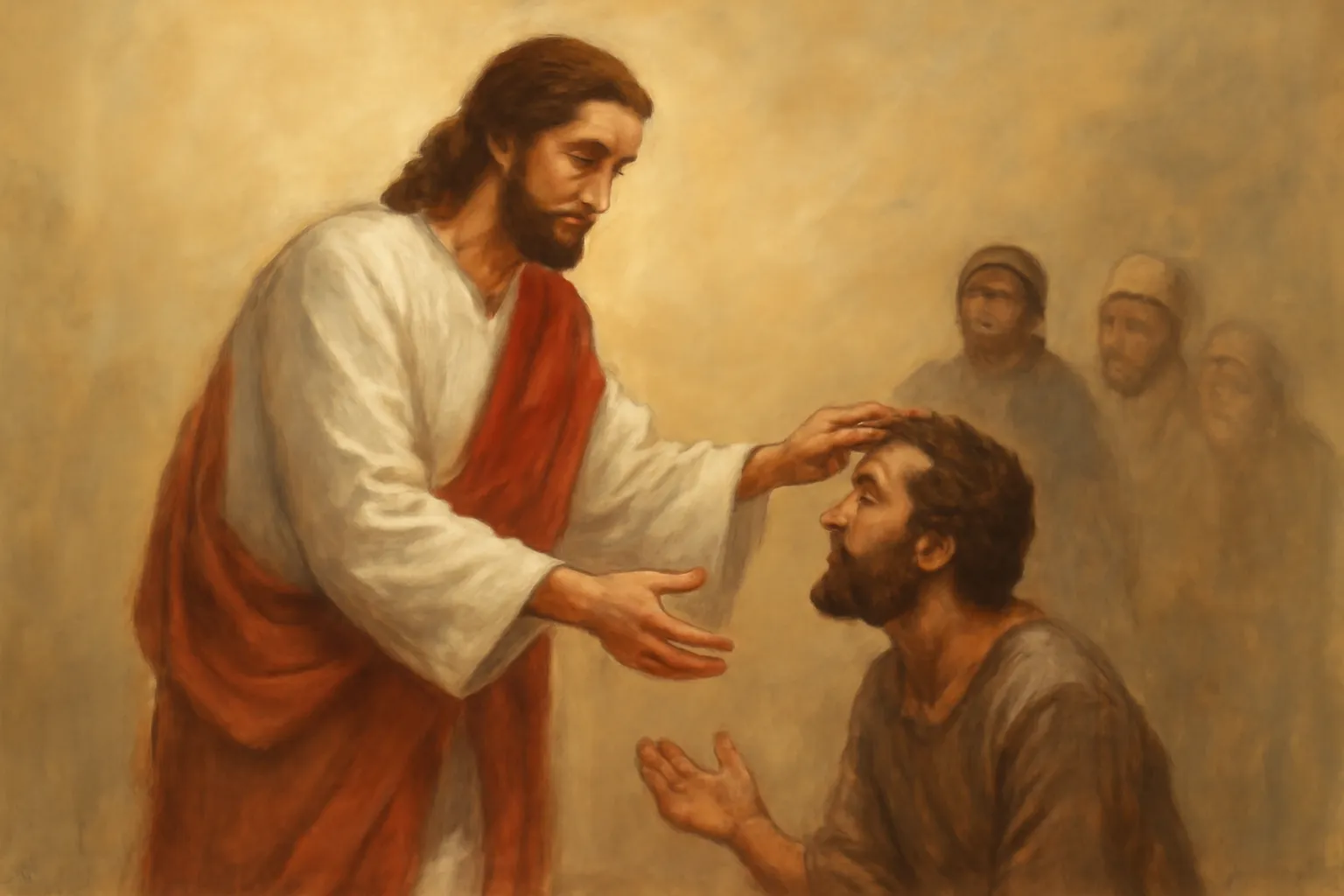
Across the four canonical Gospels, Jesus’s healings stand out as some of the most vivid and enduring portraits of his ministry. They are presented not merely as isolated marvels, but as signs of the Kingdom breaking into the brokenness of human life. In this article, we will explore the various facets of the healing miracles of Jesus, tracing how they reveal his authority, compassion, and invitation to participate in a new reality where suffering is met with mercy. We will consider the different genres within the healing reports—physical cures, exorcisms, restorations of life, and acts that involve restoration of relationships—and we will extract lessons that remain relevant for readers today.
What we mean by Jesus’s healing miracles
The term healings or miracle healings in the context of Jesus refers to events in which illness, disability, demonic oppression, and even death are confronted and transformed through his presence, word, and touch. These episodes are multifaceted: some demonstrate direct and instantaneous cures, others illustrate gradual restoration, and some illuminate inner transformation—for example, renewal of faith, forgiveness, and reconciliation with community.
Categories of healing in Jesus’s ministry
To organize the broad spectrum of Christ’s healing miracles, it helps to think in categories. The following outline highlights recurring patterns while acknowledging that individual stories often blend several themes at once.
Physical healings and restorations of bodily function, often accompanied by expressions of faith from the sufferer or onlookers.
Exorcisms and liberation from oppressive spiritual powers, sometimes presented as freeing a person to live in a new reality of peace.
Restorations of life or resurrection-like moments that reframe human vulnerability in light of divine sovereignty.
Healing through touch and spoken word—the tangible presence of Jesus communicating healing by his authority and compassion.
Healing as inclusion—stories that bring marginalized people into the circle of mercy, challenging social and religious boundaries.
Consequential healing—miracles that lead to teaching moments, provoking questions about faith, obedience, and the nature of the Messiah.
Key themes that emerge from Jesus’s healing ministry
Examining the healing episodes reveals several enduring themes that scholars, theologians, and lay readers often consider central to the message of the Lord’s healings.
Compassion as motive: The healings spring from a deep, active compassion for human suffering, not from a distant demonstration of power.
Authority and power: Jesus speaks with authority, and his healing acts authenticate his proclaimed message about the Kingdom of God.
Faith as response: In many accounts, the healing occurs in response to faith, but there are notable counterexamples that widen the scope of who may receive mercy.
Restoration and restoration of relationships: Healing often reopens pathways to family, community, and ritual purity—reflecting a holistic restoration of life.
Faith, healing, and dependence: The episodes invite readers to reflect on dependence on God while also recognizing personal agency and communal support.
Representative episodes: a guided tour through notable healings
Below are some of the most well-known accounts, presented to illustrate the range of form, setting, and outcome. Each header below introduces a specific episode or thematic cluster, followed by a concise description and its significance.
Healing of the paralytic and the theme of communal faith
In several gospel accounts, a paralytic is lowered through a roof to reach Jesus. The scene emphasizes not only the physical cure but also the formation of a community of witnesses and helpers. Jesus’ words to the paralytic—often about forgiveness of sins alongside physical restoration—highlight the interconnectedness of spiritual and physical wholeness.
Healing of the bleeding woman and the power of persistence
The story of the woman who suffers from chronic bleeding is a powerful portrait of faith as persistence. Her touch, coupled with Jesus’s response, demonstrates that healing can arise from a personal encounter even in the presence of crowd pressure and social stigma. This episode also foregrounds the idea that healing is accessible to those who seek with quiet courage.
Healing of Jairus’s daughter and the restoration of life
When a synagogue leader named Jairus pleads for his daughter’s healing, the narrative moves from crisis to a reversal of death itself in a way that resembles resurrection language. Although not a «cure» in the modern medical sense, the event functions as a dramatic demonstration of Jesus’s authority over life and death and as a sign of the reign of God breaking into ordinary time.
Healing of the ten lepers and the question of gratitude
The parallel account of ten men with leprosy who are healed at a distance offers a meditation on gratitude, faith, and inclusion. Only one returns to give thanks, prompting Jesus to highlight the importance of recognizing mercy and returning to the source of grace.
Healing of the centurion’s servant and faith across boundaries
This account, often cited as an exemplar of intercultural trust, shows that faith can cross social and religious barriers. Jesus offers healing at a distance, praising the centurion’s understanding of authority and his belief in the sufficiency of Jesus’s word.
Healing on the Sabbath and the call to humane observance
Several healings occur in conflict with strict Sabbath norms. These episodes probe the tension between ritual rules and humane care, inviting readers to consider how mercy should shape religious practice rather than be constrained by it.
Healing of the man with a withered hand and the courage to confront fear
In a tense setting, Jesus calls for the man’s hand to be stretched out, and restoration follows. The incident foregrounds healing as a decisive act that challenges oppressive responses and demonstrates bold faith in action.
Theological and ethical dimensions of Jesus’s healings
Beyond the miracle stories themselves lies a rich field of interpretation about what these healings reveal regarding God, humanity, and the ethical life. Several strands recur across the Gospel tradition.
Healing as revelation: Each miracle is a window into who Jesus is—Son of God, Messiah, and the Logos who brings order, mercy, and restoration.
Healing as invitation: Suffering is not merely a problem to be solved; it is a doorway to deeper trust, repentance, and alignment with God’s purposes.
Healing and forgiveness: Some accounts emphasize forgiveness alongside physical restoration, reminding readers that healing operates on multiple levels: bodily, spiritual, and relational.
Inclusion of the marginalized: The healings consistently cross social boundaries, lifting up women, Gentiles, and people considered ritually unclean.
Ethics of healing: The stories invite reflection on how communities care for the vulnerable, how healing should be paired with personal responsibility, and how power should be exercised with humility.
Historical context: sources, culture, and interpretation
The primary sources for Jesus’s healings are the four Gospels: Matthew, Mark, Luke, and John. While they share core claims, each author emphasizes different audiences and theological aims. The synoptic gospels (Matthew, Mark, and Luke) present many overlapping healing episodes, often with similar sequence and wording, while the Gospel of John includes healing stories that illuminate faith and identity in a distinct way.
Understanding the historical context of first-century Palestine—where illness carried social stigma, where ritual purity mattered for community life, and where honor and shame shaped daily interactions—helps readers appreciate why the healing episodes were profoundly transformative for those involved and for early Christian communities that heard these stories.
Patterns and motifs: what scholars notice across healings
Scholars who study the New Testament often point to recurring motifs that appear across many healing accounts. Recognizing these patterns can deepen readers’ grasp of the material.
Immediate and transformative outcomes: Many healings occur instantly, signaling a break with ordinary limits and affirming Jesus’s authority.
Distance and touch: Some healings happen at a distance through words, while others occur through physical contact or proximity, highlighting different modes of divine action.
Faith as initiator: In several stories, faith acts as a catalyst for healing, though there are notable exceptions that emphasize divine mercy apart from human merit.
Audience response: Healings often provoke questions, debates, or triggers for controversy among observers, including religious leaders, family members, and onlookers.
Healing and faith today: lessons for contemporary readers
While the healings belong to a historical and theological conversation, they offer practical and ethical implications for readers today. Here are some contemporary takeaways that emerge from reflecting on Jesus’s healing ministry.
Compassion in action: Like Jesus, readers are called to respond with mercy to human suffering, offering practical support, presence, and encouragement.
Holistic wholeness: Healing is not only about alleviating physical symptoms but also about restoring relationships, dignity, and a sense of belonging within a community.
Faith that seeks, not merely claims: Persistent, humble faith can be a conduit for mercy, but mercy also flows from God’s character and not only from human expectation.
Inclusion and justice: The healing narratives challenge social barriers, inviting a broader, more inclusive vision of who receives care and how society structures access to it.
Ethical use of power: The healings remind readers to exercise power with responsibility and humility, avoiding exploitation or coercion in the name of healing.
Practical reflections: how communities can honor the spirit of Jesus’s healings
If we translate the spirit of Jesus’s healings into contemporary practice, several modalities stand out. Consider the following actions as ways to live out the healing ethic in everyday life.
Create spaces of care: Build environments—faith communities, clinics, support groups, or informal circles—where people can seek help without stigma.
Show up with presence: Sometimes healing begins with simply sitting with someone who is suffering, listening without rushing to solutions, and offering steady companionship.
Promote access and justice: Work toward removing barriers to care, including financial, social, and cultural obstacles, so that mercy reaches more people.
Encourage patient faith: Support individuals in their journeys, recognizing that healing timelines vary and that grace can operate in hidden ways.
Integrate forgiveness and reconciliation: When healing involves relationships, prioritize reconciliation, mutual respect, and the restoration of trust alongside any physical or emotional relief.
Common misconceptions about Jesus’s healings
As with many ancient narratives, a few misunderstandings persist about the healings. Addressing these helps readers approach the stories with clarity and discernment.
Healings are always permanent: Some accounts depict immediate cures, but others indicate ongoing life with new challenges. Healing in the biblical sense often points beyond mere symptom relief to a transformed life.
All healings depend on personal merit: While faith and response matter in many episodes, the stories also emphasize divine mercy that operates beyond human calculus.
Healing equals victory over all pain: Healing is presented within the larger drama of human frailty and divine plan. Suffering can still exist, but it is reinterpreted within a broader narrative of grace.
Healing is solitary: The narratives frequently situate healing in community—family, friends, disciples, and Jesus himself—underscoring mutual care as essential to wholeness.
Variations in the accounts: the breadth of the Gospel witness
The four Gospels present parallel but distinct portraits of healing. Each accounts for different audiences and theological emphases. In Mark, for example, healing miracles often occur in rapid succession and carry a sense of immediacy. Luke’s Gospel emphasizes compassion for the marginalized and the universal reach of mercy. Matthew frequently ties healings to Jesus as Messiah and fulfillment of prophecy, while John’s healing narratives emphasize belief, identity, and the divine glory revealed through the healing act.
This variety invites readers to appreciate the breadth of depiction while recognizing a shared conviction: Jesus’s healings reveal the nature of God as one who draws near to human vulnerability with power, tenderness, and transformative presence.
The healing ministry as a model for discipleship
The healing episodes function not only as demonstrations of power but also as instructions for those who follow Jesus. They illuminate how disciples can participate in healing efforts—through prayer, compassionate service, and collaborative care within the community.
Prayer and discernment: Seek guidance about when and how to offer healing prayers, mindful of the dignity and autonomy of others.
Carrying mercy into daily life: Healing begins in ordinary acts of kindness, listening, and supporting people in practical needs.
Partnering with communities: Healing work often happens in collaboration with families, neighbors, medical professionals, and spiritual mentors, creating a shared path toward wholeness.
Impact on art, literature, and culture
The theme of Jesus’s healings has left an enduring imprint on art, music, literature, and public discourse. From Renaissance paintings illustrating scenes such as Jesus healing the blind to modern sermons that frame healing as social justice, these narratives have shaped how societies think about care, power, and the sacred. The recurring image of Jesus as a compassionate healer continues to inspire contemporary expressions of solidarity with the suffering.
Final reflections: why these stories endure
The healings of Jesus endure not only because of their dramatic moments but because they invite readers into a broader reflection on human vulnerability and divine mercy. They challenge us to consider what it means to belong to a community that cares for the ill, the weak, and the marginalized; to imagine a world where compassion is a governing principle; and to discern how faith, hope, and love work together to bring about real transformation.
In summary, the healing miracles of Jesus—often described as Jesus’s healings in the shorthand of popular speech—offer a multifaceted lens on suffering, faith, power, and inclusion. They teach that mercy is active, that restoration can take many forms, and that the invitation to participate in healing remains open to readers who heed the call to imitate the compassionate Saviour in their own communities.
Concluding note: embracing the lessons of Jesus’s healings
If you approach these stories with curiosity and reverence, you may find that they illuminate not only the past but also practical, ethical paths for today. Whether one approaches them as a historical record, a theological witness, or a source of spiritual encouragement, the narrative of Jesus’s healings invites readers to reflect on how mercy, faith, and action intersect in a life of meaning, service, and hope.